
Reduce Ticks While Supporting Pollinators In Your Yard
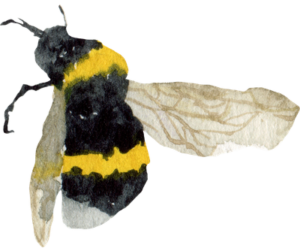
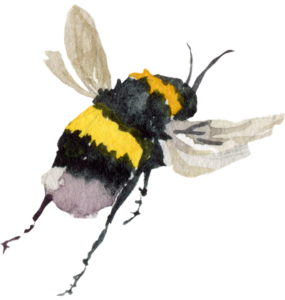
 As tick populations grow and pollinator numbers decline in New England, many people want to support pollinators while limiting ticks on their property. Wild bees need food from flowering plants, shelter and nesting sites, and protection from pesticides. While many tactics to deter and kill ticks in your yard would also deter or kill pollinators, there are options to respect—and even support—pollinators while you reduce ticks.
Remember that ticks like moisture and shade. Generally, many of the things you can do to reduce tick exposures in your yard are about removing, isolating, or reducing exposure to tick-friendly areas. Some tactics are about creating an outer barrier for less tick entry. Some are about modifying the environment to reduce the appeal to ticks.
Garden planning, barriers, and zoning
 Isolate pollinator areas. If you intentionally grow pollinator-friendly plants, expect ticks along with many of them. Keep tick-friendly gardens away from highly-trafficked areas of your yard. Keep grass mowed short in the areas most frequented by people. It may help to think in terms of “zoning,” with zones for people separate from bug-friendly ones.
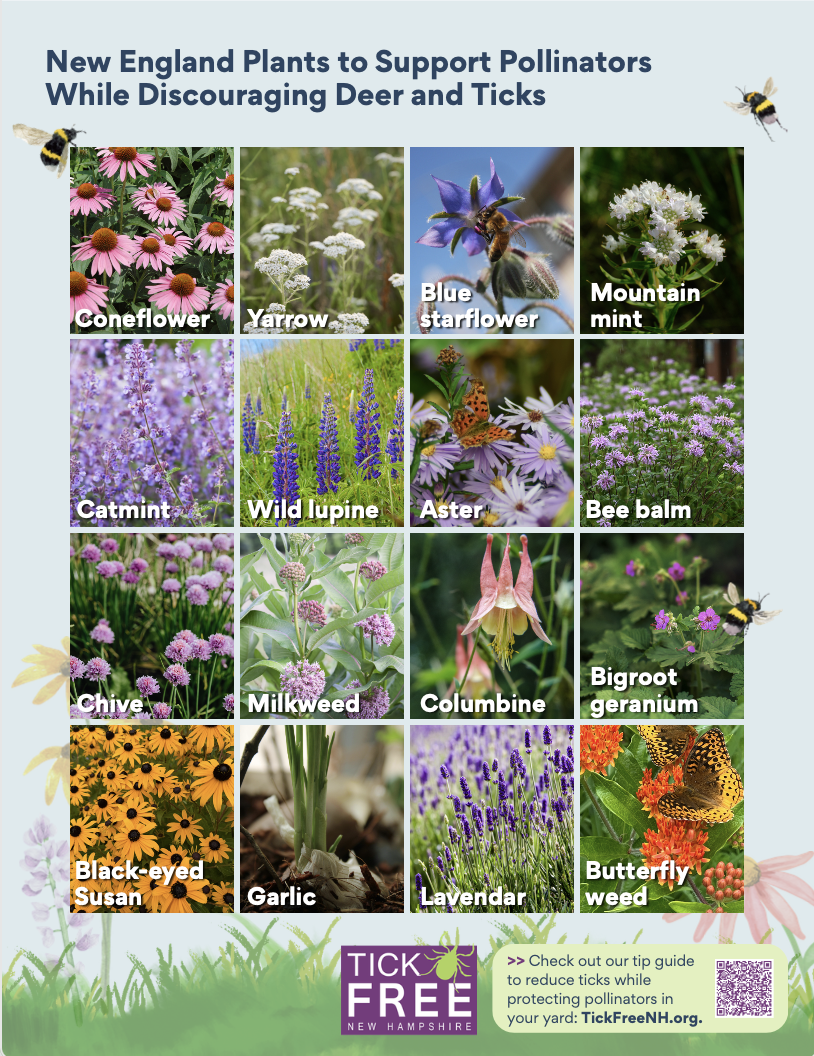
Try pollinator-friendly plants that are unappealing to ticks. Certain plants, flowers and shrubs, many with strong smells, are less tick-friendly than others. These can be used throughout gardens, or can be planted strategically to strengthen a tick barrier at the edge of your yard.
Choose pea gravel instead of mulch. Perimeters of 3+ feet at the edge of your yard can deter ticks from crossing into the grass, especially if you border a wooded area. However, these are often made of mulch or wood chips, which are dense and will block native bees from nesting beneath them. Some are also toxic. Areas at the edges of woods are particularly important to bees that nest underground. Using a light layer of pea gravel instead of mulch allows bees through to the soil, while ticks will be deterred by the dry heat it creates. If you do use mulch in your yard, avoid cedar and choose one that is untreated.
Isolate wood piles and stone walls from ticks and humans. The moisture and shade of wood piles and stone walls can both make great tick habitats. They may also shelter rodents that host ticks. Reduce tick numbers by keeping the wood pile surrounded by pea gravel. Choose a place away from your home and heavily-trafficked areas.
Take advantage of sunny spots. Place swing sets and any play equipment in sunny areas, where ticks are less likely to go. Sunshine on and around decks and seating areas can also lower the likelihood of ticks spending time there. (But do remember SPF!)
Put leaf litter and brush in one designated area, away from your home and high-traffic areas. While leaving leaf litter can be beneficial to pollinators and other wildlife, it creates an ideal environment for ticks as well. You can remove leaf litter from the majority of your lawn and still support pollinators by designating an out-of-the-way place to leave a leaf and brush pile.
If you have walking paths, keep the edges of clear. Reduce the opportunities for questing ticks to hang out on the edge of your pathways.
Wild animals and ticks
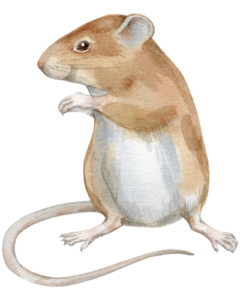 Deter deer and rodents to reduce “hitchhikers.” Use fencing, garden barriers, scent-based deer repellents, or deer-resistant (but pollinator-friendly) plants to limit ticks that ride in on deer. Avoid using groundcover plants that provide shelter to rodents, which also bring in ticks.
Allow animals that eat ticks. Chickens, wild turkeys, frogs and toads all eat ticks.
Tick tubes, tick boxes, and insecticides
Tick tubes, tick boxes, and insecticides
 Consider a bee-safe fungal insecticide. Some research has shown that two species of the fungus Metarhizium can work as a natural insecticide against ticks, as well as several other garden pests. They do not hurt bees when applied at recommended concentrations. However, they may harm aquatic ecosystems. Follow instructions carefully to increase effectiveness and limit any environmental harm.
Further reading:
- Metarhizium brunneum and anisopliae Biocontrol Agent Factsheet – Cornell Integrated Pest Management
Tick tubes can hurt bees. Tick tubes are a “host-targeted” tick control tool that work via rodents. The tubes hold cotton soaked with the insecticide permethrin. The cotton gets used as a source of nest material for rodents like mice. This does not hurt the rodent, and any ticks that bite them thereafter will die. Unfortunately, native bees often seek out and use abandoned rodent holes for their own nests. Permethrin left in these holes can remain toxic for up to a year.
Tick boxes are safer for bees, but can be expensive. Tick boxes contain rodent bait. Similar to tick tubes, they do not harm the rodent. They coat the animal in the chemical fipronil. This kills any ticks that bite the rodent. Fipronil is also toxic to bees. However, because the chemical only stays on the animal, and not in the environment, it does not pose the threat to bees like permethrin in tick tubes. Fipronil boxes, unfortunately, can only be installed by licensed professionals. Boxes are generally more expensive than tick tubes.
 Further reading:
- The Tick Project – Cary Institute for Ecosystem Studies
- Evaluation of the SELECT Tick Control System (TCS), a Host-Targeted Bait Box, to Reduce Exposure to Ixodes scapularis (Acari: Ixodidae) in a Lyme Disease Endemic Area of New Jersey Schulze, et. al – Journal of Medical Entomology
Sources
- Landscaping a Tick-free Yard – Town of Weston, MA
- Protecting Yourself From Ticks Without Harming Pollinators – Master Gardeners of Northern Virginia
- Pollinator-Friendly Mosquito and Tick Control: Tips for Homeowners – North American Pollinator Protection Campaign
- Leave the Leaves or Not: How to Help Pollinators and Avoid Ticks on Cape Cod – Barnstable Country, Cape Cod Regional Government
- Metarhizium brunneum and anisopliae Biocontrol Agent Factsheet – Cornell Integrated Pest Management
- The Tick Project – The Cary Institute on Ecosystem Studies
- Evaluation of the SELECT Tick Control System (TCS), a Host-Targeted Bait Box, to Reduce Exposure to Ixodes scapularis (Acari: Ixodidae) in a Lyme Disease Endemic Area of New Jersey – Journal of Medical Entomology, Volume 54, Issue 4, July 2017