
Insect Repellents for Tick Protection
- DEET (20-30%)
- Picaridin
- Oil of lemon eucalyptus (OLE) or para-menthane-3,8-diol (PMD)
- IR3535
- 2-undecanone
When using insect repellent, always read and follow the product label. It should only be used on exposed skin or clothing. Don’t apply repellents to cuts, wounds, or irritated skin. Do not spray them directly on your face. Instead, spray onto your hands and carefully apply to your face, avoiding the eyes and mouth. Remember to wash your hands immediately after application, and shower or bathe with soap and water once indoors.

DEET (N, N-diethyl-meta-toluamide) is the active ingredient in many of the repellent products available today. It is often used to keep pests like mosquitos and ticks from biting adults and children. DEET does not kill the bugs, but instead makes it harder for pests to smell us. Check out the EPA for additional information on DEET and its uses. Always read and follow all instructions disclosed on the product label.
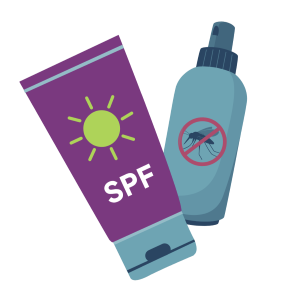
Insect Repellent and Sunscreen: Which goes first? When using sunscreen, apply the sunscreen first, and then apply insect repellent on exposed skin.
Repellents and Kids
 Parents and caregivers should apply repellents directly on to their children’s skin, avoiding the hands, eyes, and mouth.
Avoid using repellents with more than 30% DEET for children. Do not use insect repellents at all on babies younger than 2 months. Do not use products containing OLE or PMD on children under 3 years old. Repellents containing DEET, picaridin, IR3535, and 2-undecanone can be used on children without age restriction. For detailed information about using DEET on children, see recommendations from the American Academy of Pediatrics.
Dress your kids in pants, socks and shoes, and long-sleeve shirts, especially when they are venturing into heavy brush with likely tick infestations. Also consider permethrin-treated clothing for added tick protection. Learn more about Repellents and Kids.
Repellents and Pregnancy
 Always read and follow product labels. When pregnant, consider using picaridin at a 20% concentration, DEET at a 20-30% concentration, or IR3535 at a 20% concentration. CDC recommends not to use OLE or PMD on children under three years old, so avoid it while pregnant. The EPA does not recommend any additional precautions for using registered repellents on children or on women who are pregnant or lactating. You can also follow other tick preventative steps like covering up with pants, socks, shoes, and long sleeves.
Learn more about Repellents and Pregnancy.
Helpful resources for choosing a bug repellent
- EWG’s Guide to Bug Repellents – The Environmental Working Group (EWG) acknowledges that many people are concerned about the possible drawbacks of common repellent active ingredients, like DEET. EWG researchers have analyzed the science in depth and found that, with proper application and precaution, the recommended active ingredients—Picaridin, DEET, and IR3535—effectively reduce risk from life-altering disease and have very low toxicity concerns.
- Find the Insect Repellent that is Right for You – Environmental Protection Agency (EPA) – Use the search tool to find EPA-recommended brands with information on how long they will protect against ticks and active ingredients. Last updated 2019.
- Consumer Reports’ Insect Repellent Buying Guide – Consumer Reports
- Mosquitoes, Ticks, and Other Arthropods – CDC
- Choosing and Using Insect Repellents – National Pesticide Information Center
- Using Insect Repellents Safely and Effectively – EPA