
Prevent Ticks
Prevent ticks from being on your body, kids, pets, and property.
What is the best way to protect yourself and those you care about from ticks?
Many Granite Staters know ticks–and hate ticks! But tick risks in New Hampshire are changing. Tick prevention methods can limit the ticks that reach your body, your kids’ bodies, your pets, and your property.
Protect yourself and loved ones by taking these steps to prevent tick bites:
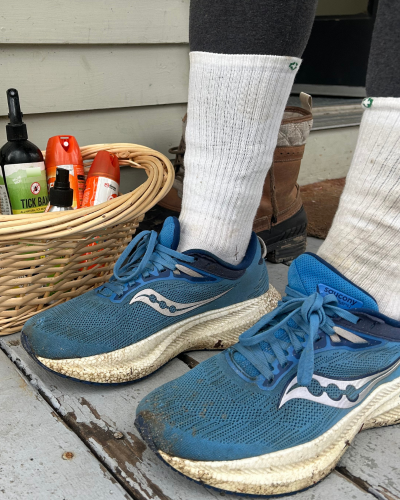
- Wear tick-repellent clothing. Use permethrin spray on clothes, shoes, and gear. You can also buy pre-treated clothes.
- Tuck pants into socks
- Wear long sleeves
- Wear light-colored clothing
- Visually scan for ticks on your clothes often. You may use a sticky lint roller to help remove loose ticks on the go.
- Use an EPA-registered insect repellent. Learn more about selecting the most effective types of tick repellents.
- Stay on the center of paths, avoiding tall grass, brush, leaf litter, and branches
- Reduce the number of ticks that enter your yard, and keep high-traffic areas (like seating areas and playsets) separate from areas that attract ticks
- When you come in from outside, put clothes in the dryer, bathe, and do a full body tick check.
For detailed information about tick prevention and control, see Center for Disease Control and Prevention: Avoiding Ticks. Children aged 2 to 13 are particularly at risk.
%
Most tick exposures happen doing daily activities.
An estimated three quarters of all Lyme disease cases are acquired from ticks picked up during activities around the home. Tick prevention is important every day–not just while hiking or camping.
Outdoor workers can have a high risk of exposure. Visit the Tickborne Diseases in Workers page from the National Institute for Occupational Safety and Health (NIOSH).